Working with an ADHD brain, rather than against it, mostly comes down to fit. In studies of adults with ADHD, the right surroundings, flexible work, knowing your own strengths and having people who back you up were all linked to doing and feeling better. Most of that evidence shows links, though, not proof of cause.
What does working with an ADHD brain look like at work?
A large review pulled together 79 studies on adults with ADHD at work, covering 68,275 people across 22 countries (Hotte-Meunier 2024). Its conclusion was hopeful: workers with ADHD can adapt and thrive when the person and the setting fit, with accommodations and support. The authors also argued that many ADHD-related challenges can be remodeled as assets in workplaces that allow flexible working and are open to neurodiversity.
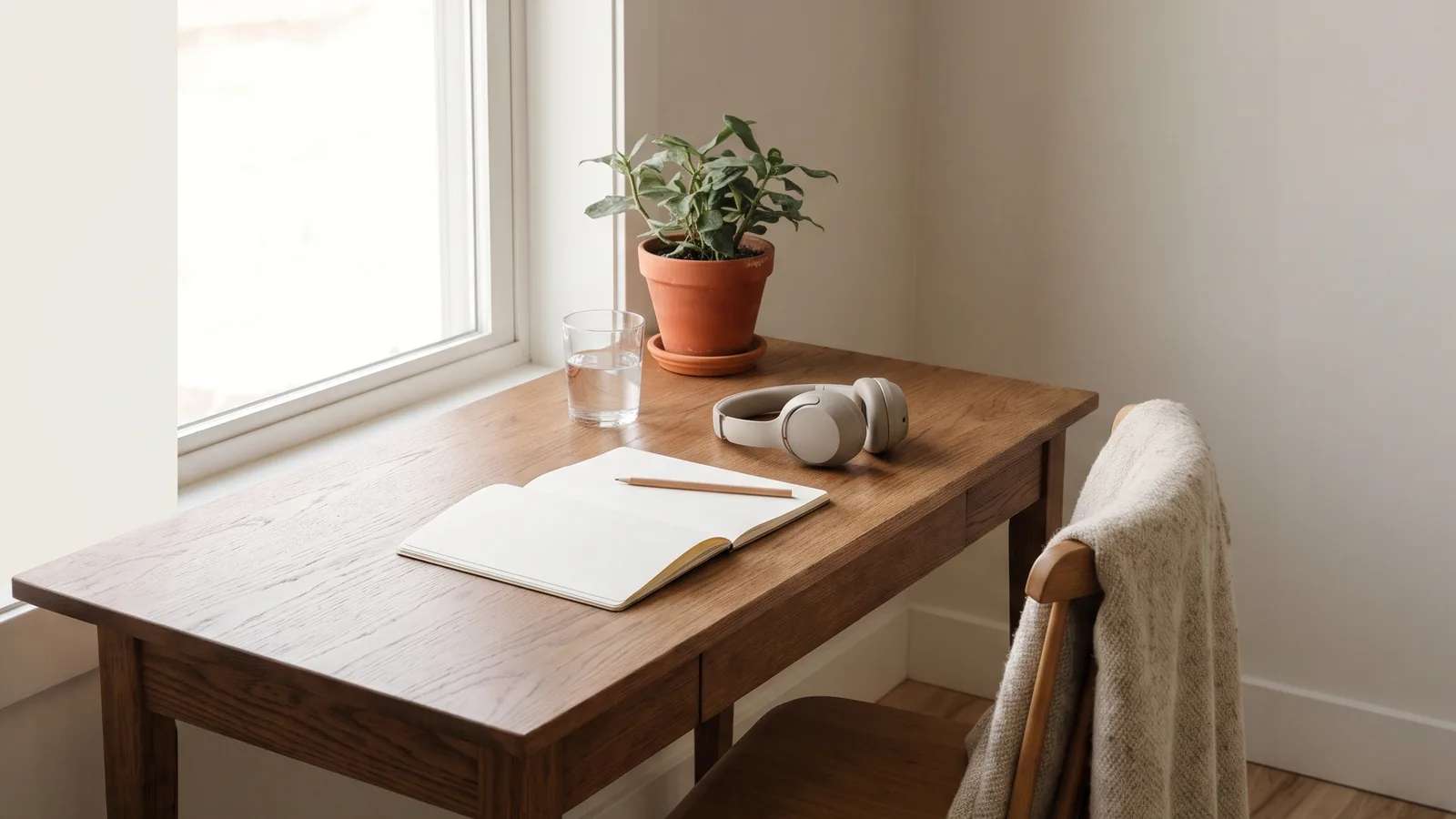
The review describes the accommodations people reported using. They included private, quiet workspaces, flexible workday hours, frequent breaks in long meetings and handing off tedious tasks. Workers also leaned on to-do lists, checklists, planners, alarms, timers and noise-canceling headphones. You can explore more of this in the environment and strengths section.
Two limits matter here. Most of the people studied were men, so the picture may fit women less well. And many of the included studies were snapshots in time, which can't show that any one change caused a better outcome.
Fidgeting may belong in this conversation too. One study fitted 70 adults with ADHD, aged 18 to 50, with movement sensors on their wrists and ankles while they did a 120-trial attention task in a lab (Son 2024). They fidgeted more on the trials they got right than on the ones they got wrong. Over the session, fidgeting went up while accuracy stayed steady. The authors suggest fidgeting might help some people stay alert and focused, so telling adults with ADHD to sit still in meetings or lectures could backfire.
That's a cautious idea, not a tested fix. There was no comparison group without ADHD, it was one session on one task, and fidgeting could simply come along with paying attention rather than helping it.
Do people with ADHD really have strengths?
A study of 400 adults in the UK compared 200 who reported an ADHD diagnosis with 200 who didn't, matched on things like age, sex and education (Hargitai 2025). The adults with ADHD rated themselves higher on a handful of strengths, most notably hyperfocus, humor and creativity. Overall, though, they endorsed only slightly more of these strengths, and the evidence for that overall gap was weak.
Here's the more useful part. The two groups didn't differ in how well they knew their own strengths or how much they used them. And in both groups, people who knew their strengths better tended to report better wellbeing, better quality of life and fewer mental health symptoms. Using strengths more was linked to higher wellbeing too, and among the adults with ADHD, to better overall quality of life.
The diagnoses weren't checked independently, people were recruited online and may have been coping better than average, and strengths were self-rated. Because it was a single snapshot, it can't say whether knowing your strengths makes life go better or whether people who are doing well find their strengths easier to see.
A Swedish interview study heard something similar in people's own words (Oscarsson 2022). It talked with 20 working adults with ADHD, aged 23 to 60, most of them women. They named creativity, quick-wittedness and hyperfocus as strengths. They also described real costs: trouble managing emotions, sensitivity in social situations, and anxiety, stress and exhaustion. Many said their workplaces lacked structure, support from managers was inconsistent, and arranging accommodations was often left to them. Deciding whether to tell people about their diagnosis was a genuine dilemma.
The study set out to explore work stress, so it may have drawn people who'd had more of it. That shapes the picture without erasing it.
Why the people around you matter
A Canadian study of 64 adults with ADHD, aged 19 to 80 and mostly women recruited around a university, looked at what goes along with getting through daily life well (Atique 2025). People who reported more practical help, a stronger sense of belonging and support that lifted their self-esteem had fewer difficulties in everyday functioning. That held even after accounting for how strong their ADHD symptoms were, and for depression and anxiety.
Some things you might expect to matter didn't show a link with overall functioning. Personality traits like conscientiousness and extraversion, and a practical "solve the problem" coping style, weren't tied to how people were doing overall. Positive childhood experiences were linked to better functioning in a few specific areas, such as community life and self-care routines, but not to overall functioning.
One finding is easy to misread. Support didn't soften the link between symptom severity and functioning. People with stronger symptoms still tended to have more difficulty. What the authors noted instead is that the benefit of support showed up at every level of symptoms, so it wasn't only useful for people with milder ADHD.
The authors are careful here, and you should be too. The group was small and mostly White, female and well educated. Everything was self-reported. It was a single snapshot, and the authors say many of these links could run the other way: people who are functioning better may find it easier to keep supportive relationships. Their suggestion, offered tentatively until longer studies exist, is that building self-esteem and social connection through supportive relationships may help everyday functioning.
If you're also raising a child with ADHD, their social world is its own topic: helping your child with ADHD make and keep friends.
Try this today: pick one tool that workers with ADHD reported using, like a timer, a checklist or noise-canceling headphones, and try it on a single task you usually put off.